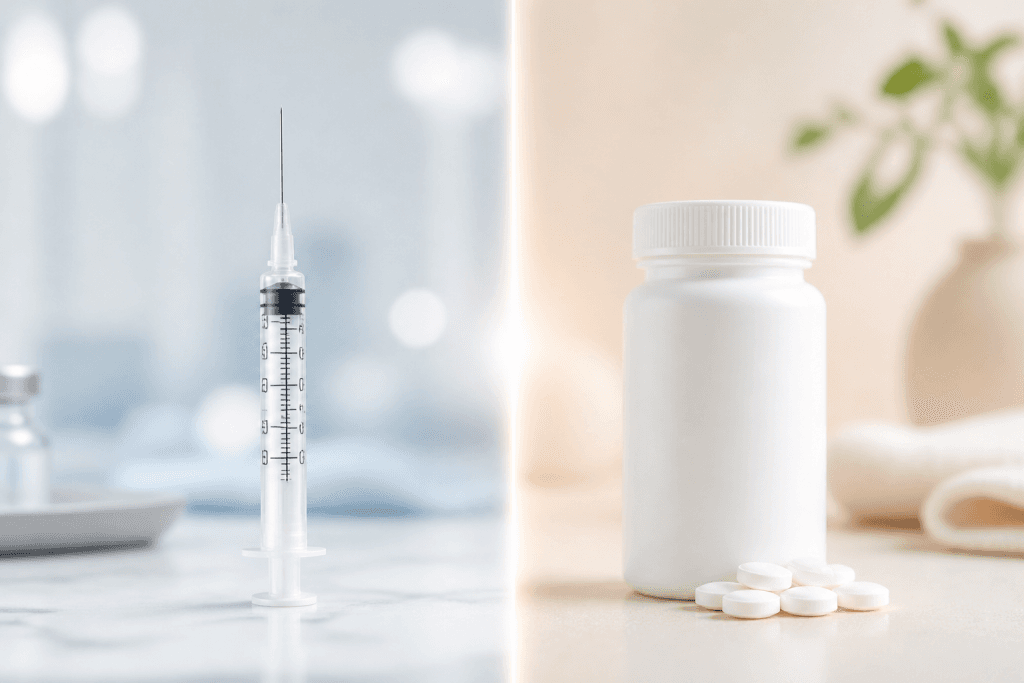
For years, anyone seeking advanced weight loss and glucose control had limited options: injectable GLP-1 receptor agonists like semaglutide and tirzepatide. These medications have delivered remarkable results, but they require refrigeration, careful storage, and regular injections—barriers that have prevented many people from accessing this transformative therapy.
Now, the landscape is shifting. Oral GLP-1 receptor agonists have arrived, and they represent one of the most significant breakthroughs in metabolic medicine in decades. Unlike their peptide-based predecessors, these small-molecule pills offer the same powerful benefits without the injection burden. Let’s explore how they work, what the science shows, and who stands to benefit most from this revolution.
Understanding GLP-1: The Body’s Natural Appetite Regulator
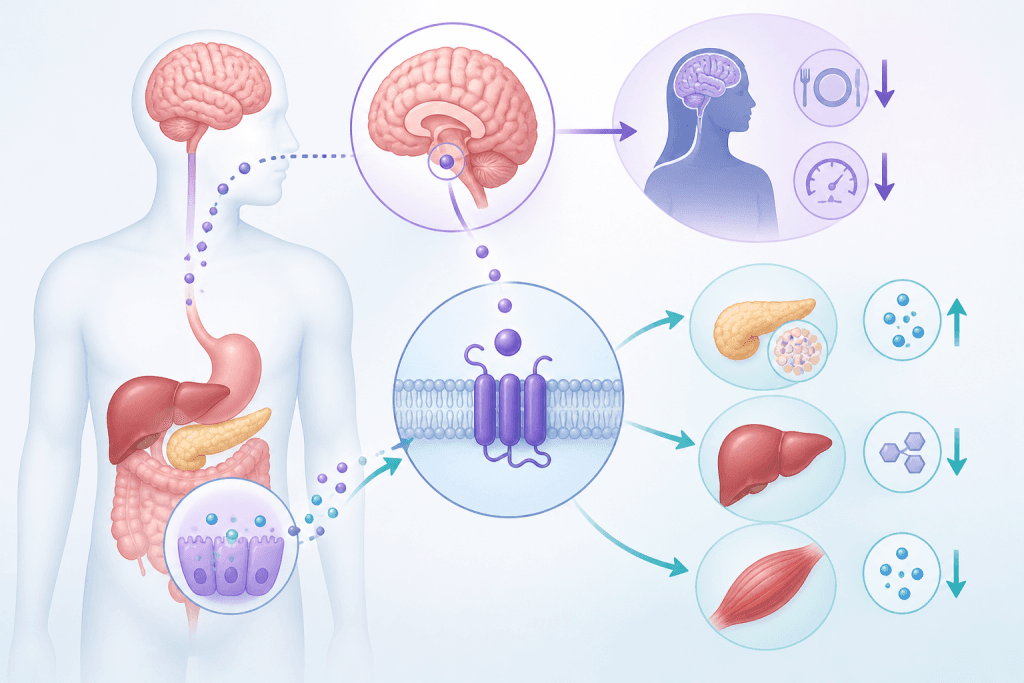
Before diving into oral therapies, it’s important to understand what GLP-1 actually does. GLP-1 (glucagon-like peptide-1) is a hormone your body naturally produces after eating. Think of it as your metabolic control center—it works behind the scenes to regulate blood sugar, manage hunger, and control how quickly your stomach empties.
When GLP-1 receptors are activated, several important things happen simultaneously:
- Glucose-dependent insulin release: The pancreas releases insulin when blood sugar rises, but only when needed. This glucose-dependent action is crucial—it lowers blood sugar safely without causing hypoglycemia.
- Glucagon suppression: The liver stops releasing stored glucose when it’s not necessary, preventing unnecessary blood sugar spikes.
- Delayed gastric emptying: Your stomach empties more slowly, meaning nutrients enter your bloodstream more gradually. This creates sustained fullness and prevents sharp glucose spikes after meals.
- Appetite regulation: GLP-1 receptors in your brain reduce hunger signals, making you feel satisfied with less food and less frequently.
Injectable semaglutide and tirzepatide activate these same pathways—and they work exceptionally well. But now, oral small-molecule GLP-1 agonists like orforglipron are delivering comparable benefits in pill form, opening doors for patients who previously couldn’t or wouldn’t use injections.
The Science of Oral GLP-1 Receptor Agonists: A Different Approach

The key to understanding oral GLP-1s lies in their molecular design. Unlike semaglutide and tirzepatide, which are peptide-based medicines, orforglipron is a small-molecule, non-peptide GLP-1 receptor agonist. This fundamental difference creates several practical and biological advantages.
Orforglipron activates the same GLP-1 receptor as injectable GLP-1s, but it does so through a slightly different signaling pathway. Specifically, it’s a Gs-biased partial agonist, meaning it preferentially activates certain intracellular signaling cascades (particularly cyclic AMP production) while minimizing others. Early research suggests this signaling profile could potentially reduce receptor desensitization over time, meaning the medication may maintain its effectiveness longer without losing potency—though this hypothesis still requires extensive human clinical confirmation.
More importantly for practical purposes, the small-molecule structure means orforglipron is:
- Stable enough to be formulated as a tablet
- Doesn’t require refrigeration or specialized storage
- Easier and less expensive to manufacture at scale
- Simpler to integrate into daily medication routines
For someone managing their metabolic health, this means no more coordinating injection schedules or worrying about keeping medications cold during travel—a game-changer for consistency and adherence. Many patients find that maintaining consistent adherence is central to success, which is why tools like the ShotLog app have become invaluable. With smart reminders and protocol automation, users can stay on track with their health regimens, whether they’re using injectable or oral therapies. The app’s progress-tracking features—including 14-point body measurements and progress photos—help users visualize their transformation over time.
What Clinical Trials Reveal: The Weight Loss and Metabolic Benefits
The clinical evidence for oral GLP-1s is compelling. In a landmark Phase 2 obesity trial published in the New England Journal of Medicine, researchers compared orforglipron to placebo over 36 weeks in adults with obesity or overweight.
The results were striking:
- Placebo: 2.3% weight loss
- Orforglipron 12 mg: 9.4% weight loss
- Orforglipron 24 mg: Approximately 12% weight loss
- Orforglipron 45 mg: 14.7% weight loss
What’s particularly exciting: 46–75% of participants achieved at least 10% total body weight reduction, depending on which dose they received. For context, a 10% weight reduction is considered clinically meaningful and often associated with significant improvements in metabolic health, joint stress, and overall quality of life.
These weight-loss percentages place oral GLP-1s in the same category as injectable semaglutide 2.4 mg weekly—one of the most effective weight-loss medications ever approved. And crucially, this was achieved with a daily pill, no injections, and no storage complications.
Beyond weight loss, the trials documented improvements in every cardiometabolic risk factor tested compared to placebo: blood pressure, waist circumference, lipid markers, and markers of inflammation. These aren’t just cosmetic changes—they represent meaningful reductions in risk factors for heart disease, stroke, and metabolic dysfunction.
Glucose Control and Beyond
While weight loss captures headlines, the metabolic benefits extend deeper. In patients with type 2 diabetes, orforglipron demonstrated dose-related reductions in HbA1c (a marker of average blood sugar control over three months), with regulatory reviews confirming clinically meaningful glucose-lowering effects.
The mechanism is elegant: by enhancing glucose-dependent insulin release, suppressing glucagon, slowing stomach emptying, and reducing overall calorie intake, oral GLP-1s address multiple aspects of metabolic dysfunction simultaneously. Rather than forcing the pancreas to produce more insulin (which stresses the system), GLP-1 agonists only trigger insulin release when blood sugar is actually elevated—a physiologically intelligent approach.
The gastrointestinal effects—which are common with all GLP-1 therapies—deserve mention. The same delayed gastric emptying that creates fullness can cause nausea, constipation, or diarrhea in some patients, particularly during the initial weeks of therapy. These effects are typically transient and manageable, but they highlight why close monitoring and healthcare provider guidance are essential.
Who Benefits Most From Oral GLP-1 Therapy?
Oral GLP-1 receptor agonists are most appropriate for adults with:
- Type 2 diabetes inadequately controlled with lifestyle measures and other medications
- Obesity or overweight with weight-related health complications, particularly when approved weight-management indications apply
- Elevated cardiovascular risk in populations where evidence supports their use
- A strong need for weight reduction combined with glucose control
- An aversion to injections or difficulty managing injectable therapy logistics
- Complex travel schedules or lifestyle factors where injectable storage is challenging
For patients in these categories, the convenience factor can be transformative. Someone who previously avoided semaglutide because of needle anxiety or travel concerns now has a meaningful alternative. Over time, convenience translates to better adherence, which translates to better outcomes.
That said, oral therapy isn’t automatically superior for every individual. Some patients find that injectable GLP-1s work better for their specific metabolism, or they prefer the once-weekly dosing rhythm of an injection to daily pill-taking. The best therapy is the one that a patient will use consistently and tolerate well, in partnership with their healthcare provider.
The Role of Consistency and Tracking in Your Success
Regardless of whether someone chooses an oral or injectable GLP-1 therapy, success depends on consistency. This is where comprehensive tracking becomes invaluable. The ShotLog app offers sophisticated tools designed specifically for metabolic therapy users: automatic protocol reminders ensure you don’t miss a dose, while the Biograph feature visualizes how medication levels fluctuate in your body over time, giving you a clear picture of your therapy’s trajectory.
Progress tracking is equally important. The app’s 14-point body measurement system and progress photo feature allow you to document changes that the scale alone might miss—like improved waist circumference or how clothes fit. Pairing this with the app’s nutrition database (with over 1 million foods) helps you understand the relationship between your eating patterns and your results.
For those using oral GLP-1s specifically, maintaining proper medication storage remains important, even though refrigeration isn’t required. A Case for 3ml Vials helps keep your supply organized and protected, ensuring tablets stay in pristine condition throughout your treatment.
Important Safety Considerations and Research Gaps
While the efficacy data for oral GLP-1s is encouraging, it’s important to acknowledge what we still don’t know. Regulatory reviewers have requested additional post-approval studies examining long-term cardiovascular outcomes, potential effects on liver function, and effects on gastric retention. This doesn’t mean the medications are unsafe—it means we’re still characterizing their full long-term safety profile, as we do with most new medicines.
Semaglutide, by contrast, has extensive cardiovascular outcome data showing favorable effects in high-risk populations. This evidence specific to oral GLP-1s is still being generated. When considering any new therapy, it’s critical to have this conversation with your healthcare provider, who can weigh the evidence against your individual risk factors and health goals.
Additionally, oral GLP-1s are not appropriate for everyone. Patients with a personal or family history of medullary thyroid cancer, those with severe kidney disease, or those planning pregnancy should discuss these medications carefully with their providers. Gastrointestinal conditions, medication interactions, and other factors also require individualized assessment.
The Bigger Picture: Access and the Future of Metabolic Medicine
Beyond the individual benefits, oral GLP-1 agonists represent something larger: the democratization of advanced metabolic therapy. Injectable GLP-1s have been difficult to scale globally because they require specialized manufacturing, cold-chain distribution, and patient comfort with injections. A stable, shelf-stable oral tablet changes everything.
In regions where maintaining refrigeration is challenging, where needle anxiety is particularly common, or where access to specialized clinics is limited, oral GLP-1s could reach millions of people who currently have no access to this class of therapy. This is a public health opportunity.
From a research perspective, the development of orforglipron and similar molecules demonstrates that we’ve learned enough about GLP-1 biology to design non-peptide agonists that deliver clinical benefits. This opens doors for future innovations: combination therapies, longer-acting formulations, or agents with even more refined signaling profiles.
A Disclaimer: Partner With Your Healthcare Provider
This article is educational and should not be considered medical advice. GLP-1 receptor agonists—whether oral or injectable—are prescription medications that require careful medical oversight. Decisions about whether these therapies are appropriate for you, which formulation to use, and how to monitor your response should be made in partnership with your healthcare provider, who understands your complete medical history, current medications, and individual health goals.
Oral GLP-1 therapy represents a genuine advance in metabolic medicine, but it’s one tool in a comprehensive approach to health that includes nutrition, physical activity, sleep, and stress management. The most successful patients combine medication with lifestyle changes and consistent self-monitoring.
The Bottom Line
The arrival of oral GLP-1 receptor agonists marks a pivotal moment in weight loss and metabolic health. For the first time, patients who want the proven benefits of GLP-1 therapy but prefer to avoid injections have a scientifically validated alternative. Early clinical data suggests these medications deliver weight loss and metabolic improvements comparable to their injectable counterparts, with the added convenience of a daily pill.
If you’ve been hesitant about injectable GLP-1s, or if you’re exploring your options for the first time, oral GLP-1 therapy deserves a conversation with your healthcare provider. This is genuinely exciting progress in our ability to address obesity, type 2 diabetes, and metabolic disease.
Related Products from ShotLog
Whether you’re using oral GLP-1 therapy, injectable medications, or a combination approach, having the right tools helps maximize your success:
- ShotLog App – Track your complete metabolic health journey with smart reminders, biograph visualization, 14-point body measurements, and progress photos on iOS and Android.
- Reusable Peptide Pen – V2 – For patients using injectable peptides alongside oral therapy, a reliable injection device ensures proper administration.
- FDA-Cleared 510(k) Reusable 80 Unit Injection Pen – Professional-grade precision for those combining injectable and oral approaches.
- The Ultimate Peptide Travel Cooler Case – Even though oral GLP-1s don’t require refrigeration, many patients use multiple medications. This cooler protects other therapies during travel.
- Case for 3ml Vials – Organize and protect your medication supplies in a dedicated, secure container.