Your liver is one of the most hardworking organs in your body. It filters your blood, produces bile, stores vitamins, and detoxifies harmful substances—all while managing hundreds of metabolic processes every single day. Given its critical role in your health, it makes sense that researchers have spent decades exploring ways to support optimal liver function.
One fascinating area of investigation involves liver bioregulator peptides—short chains of amino acids designed to signal your liver to enhance repair and regeneration. Unlike supplements that claim to “boost” liver function, these peptides work at a deeper, more nuanced level by communicating directly with your liver cells.
Let’s explore how these peptides work, what the science tells us, and whether they might be right for your health journey.
What Are Liver Bioregulator Peptides?

Bioregulator peptides represent a unique class of compounds developed through decades of peptide research, particularly in European scientific centers. The concept is elegantly simple: if we can identify the smallest active peptide sequences that trigger liver repair and regeneration, we might be able to synthesize them to support hepatic function.
The most well-known liver bioregulator is Ovagen, which emerged from research into peptide extracts from animal livers. Researchers recognized that traditional ancestral health practices—like consuming beef liver for its nutrient density—were pointing to something deeper. They asked: what if we could isolate the specific peptide signals that make liver tissue so restorative?
This research led to the identification of peptide sequences that appear to have liver-specific activity, which were then synthesized to create modern bioregulator products. The theory is that these peptides communicate with your liver cells through epigenetic pathways, essentially telling them to repair and regenerate.
The Mechanism: How Bioregulator Peptides Communicate With Your Liver
Understanding how these peptides work requires us to zoom in on cellular communication. Unlike medications that typically target specific receptors or enzymes, bioregulator peptides operate through epigenetic gene regulation—a sophisticated biological process that influences which genes your cells express without changing the underlying DNA sequence.
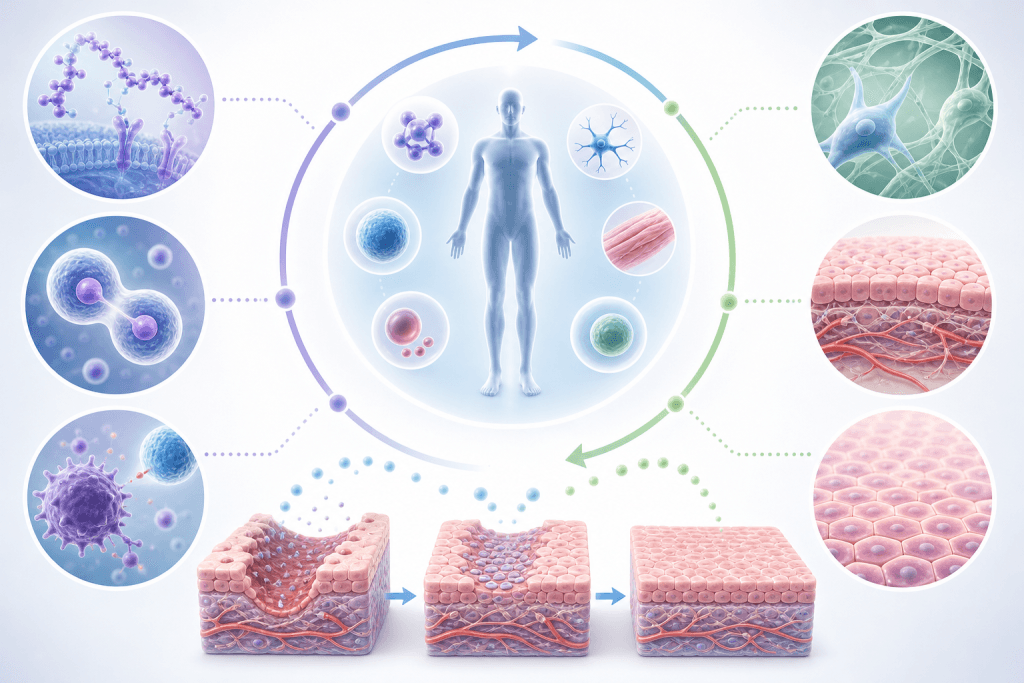
Here’s the simplified version: Your liver cells have the genetic information they need to repair and regenerate, but they don’t always activate these repair programs. Bioregulator peptides appear to act as cellular messengers, signaling your hepatocytes (liver cells) to “turn on” regenerative pathways. This includes:
- Cellular repair mechanisms: Activating the cellular machinery responsible for fixing damaged tissues
- Reduced oxidative stress: Supporting your cells’ ability to manage free radicals and inflammatory molecules
- Enhanced tissue integrity: Strengthening the structural components that keep liver tissue healthy
- Improved cellular migration: Facilitating the movement and organization of cells during repair processes
- Vascular support: Promoting healthy blood flow to liver tissue for optimal nutrient and oxygen delivery
What makes this approach different from traditional liver supplements is the specificity. Rather than providing general nutritional support, bioregulator peptides target the fundamental signaling systems that control whether your liver enters a state of regeneration.
The Research Foundation: What Science Tells Us
The scientific story of liver bioregulator peptides is primarily built on preclinical research—meaning laboratory and animal studies that show promise but require human validation.
Studies have demonstrated that certain peptide compounds, particularly BPC-157 (which shares some mechanisms with bioregulators), show protective effects against oxidative stress in liver tissue and support tissue repair pathways. Research has also highlighted the role of peptide signaling in activating cellular pathways associated with recovery from injury.
The Russian research that developed these bioregulators also examined their effects on liver tissue damaged by hepatitis and chemotherapy exposure, with encouraging preliminary findings. However, it’s important to note that preclinical promise doesn’t automatically translate to human clinical effectiveness, which is why ongoing research and proper medical oversight remain essential.
What this research does tell us is that the biological rationale for liver bioregulators is sound: liver cells do respond to specific peptide signals, and these signals can influence regenerative capacity.
Who Might Benefit From Liver Bioregulator Peptides?
While more human clinical research is needed, liver bioregulator peptides may be of interest to individuals concerned with:
- Metabolic health: Those working to optimize liver function as part of broader metabolic improvements
- Aging and longevity: People interested in supporting organ health throughout the lifespan, as bioregulators represent a precision-health approach
- Preventive wellness: Individuals in relatively good health who want to proactively support their liver’s natural regenerative capacity
- Recovery support: Those working with healthcare providers on specific liver health concerns and seeking complementary approaches
For individuals with active liver disease, cirrhosis, hepatitis, or elevated liver enzymes, these peptides should only be considered as part of a comprehensive medical plan overseen by a qualified healthcare provider—not as a replacement for established treatments.
Supporting Your Liver Health Journey: The Bigger Picture
Whether you’re exploring bioregulator peptides or other peptide therapies, consistency and tracking are crucial. Many wellness-focused individuals find that monitoring their health metrics helps them understand what’s working.
The ShotLog app offers a comprehensive platform for tracking your entire wellness journey. With features like progress tracking through 14-point body measurements, weight monitoring, and progress photos, you can visualize the real-world outcomes of your health protocols. The app’s Biograph visualization feature shows you how peptide levels fluctuate in your body over time, giving you data-driven insights into your protocol’s effectiveness. For those taking multiple peptide therapies, the smart protocol automation tracks your schedule, while vial tracking ensures you never run out of supplies.
Beyond peptides, supporting liver health involves proven lifestyle measures: maintaining healthy body weight, limiting alcohol consumption, staying hydrated, eating a nutrient-dense diet, managing stress, and getting regular physical activity. These fundamentals remain the foundation of hepatic wellness.
If you’re traveling with peptide supplies, proper storage is essential to maintain their integrity and effectiveness. The Ultimate Peptide Travel Cooler Case maintains optimal temperature during travel, ensuring your peptides remain viable whether you’re at home or on the road.
Important Safety Considerations
Liver bioregulator peptides represent a frontier in precision health, but they’re not without considerations. The peptide research field is evolving rapidly, and long-term human safety data for many of these compounds remains limited. This doesn’t mean they’re unsafe—it means we should approach them with appropriate caution and professional guidance.
Key safety considerations include:
- Individual variation: Just as people respond differently to medications, peptide responses vary significantly
- Product quality: Source peptides from reputable providers with quality assurance standards
- Medical supervision: Work with healthcare providers familiar with peptide therapies, especially if you have existing liver conditions or take medications
- Monitoring: Regular liver function tests can help you and your healthcare provider assess your body’s response
The Bottom Line: A Precision Approach to Liver Health
Liver bioregulator peptides represent an exciting development in the field of precision health—compounds designed to communicate with your body at the cellular level to support natural regenerative processes. While the research foundation is promising, especially for prevention and optimal health support, these peptides are best understood as one tool among many in a comprehensive health strategy.
The future of hepatic wellness lies not in magic bullets but in multifaceted approaches: lifestyle optimization, targeted supplementation, professional medical guidance, and emerging technologies like bioregulator peptides used thoughtfully and in context.
If liver bioregulator peptides align with your health philosophy, work with qualified healthcare providers to determine if they’re appropriate for your individual situation, and commit to tracking your results with precision tools and consistent monitoring.
Important Disclaimer
This article is educational and informational only. Liver bioregulator peptides are not FDA-approved medications for treating liver disease, and claims about their clinical effectiveness remain under investigation. If you have liver disease, abnormal liver function tests, or chronic health conditions, consult with a qualified healthcare provider before starting any new supplement, peptide therapy, or wellness protocol. This article does not constitute medical advice. Always prioritize professional medical guidance for your health decisions.
Related Products from ShotLog
- ShotLog App — Track your complete peptide protocol with smart reminders, biograph visualization, and comprehensive progress metrics
- Reusable Peptide Pen – V2 — Precision injection delivery for consistent, reliable administration ($21.99-$24.99)
- FDA-Cleared 510(k) Reusable 80 Unit Injection Pen — Professional-grade precision pen from Nest Scientific ($32.99)
- The Ultimate Peptide Travel Cooler Case — Maintain optimal storage temperature while traveling ($20.99)
- Universal Peptide Pen Needles — Compatible with most peptide pen systems ($12.99)
- Case for 3ml Vials — Organized, protected storage for your peptide supply ($4.98-$8.98)