You walk into a room and can’t remember why you’re there. Halfway through a sentence, a familiar word slips away. Your afternoon feels like thinking through fog. If that sounds familiar, you’re not alone, and there are science-backed ways to support your thinking and get your mental clarity back.
Brain fog is a cluster of symptoms rather than a single diagnosis: less mental clarity, slower processing, poor concentration and trouble finding words. The encouraging part is that your brain stays highly adaptable. Work on peptide therapy and neuroplasticity shows how targeted compounds can support the biology behind cognitive function.
Understanding Brain Fog: More Than Just “Getting Older”
Brain fog often shows up in your 40s and 50s, and it’s easy to write it off as an inevitable part of aging. Often, though, cognitive decline is a signal that your brain needs support, and that can change.
The usual causes of brain fog can often be reversed: chronic inflammation, metabolic problems, poor sleep and too little stimulation of the brain’s networks. These factors make communication between brain cells less efficient, without causing permanent damage to the neurons. That matters, because it means stepping in, even later in life, can help bring back clarity and support a resilient mind.
Recovery starts with understanding neuroplasticity, your brain’s ability to reorganize its structure and function throughout your whole life. It depends on forming new connections between neurons, strengthening existing pathways by using them, and tuning brain networks in response to experience and challenge.
How Peptides Support Neuroplasticity and Brain Function
At the cellular level, cognitive function depends on a few key processes that peptides can influence:
Synaptic Communication and Connection

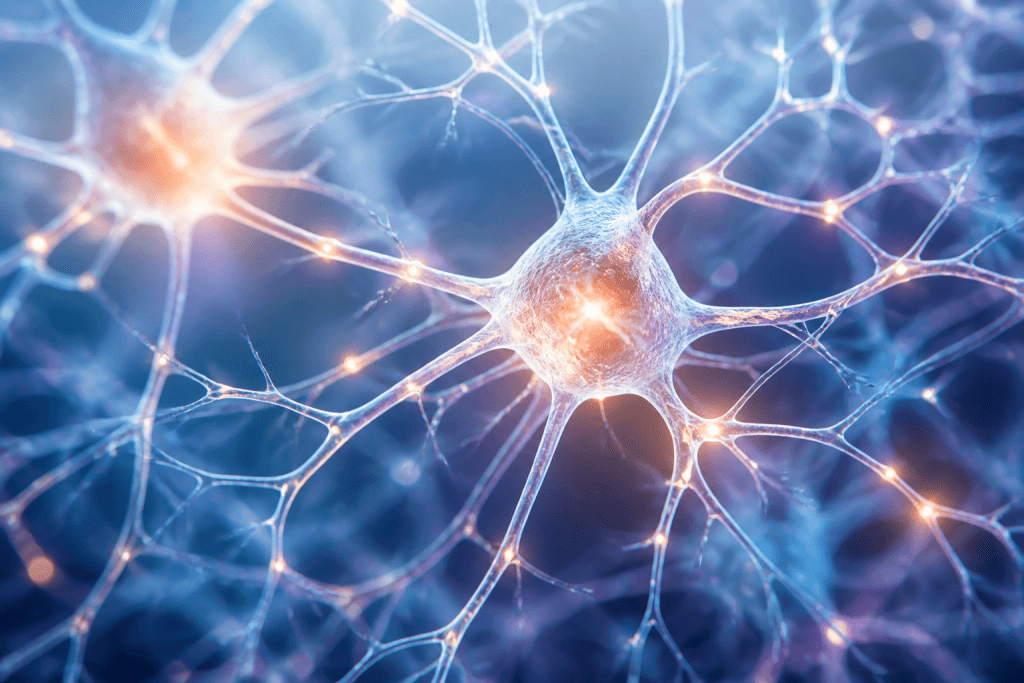
Your brain has roughly 86 billion neurons, and their power comes from the connections between them, called synapses. When you think, learn or remember, electrical and chemical signals jump across these synaptic gaps. Peptides that support brain health work by making these connections stronger and more efficient, a process called synaptic plasticity.
Synaptic plasticity depends on complex chains of molecular signals involving neurotransmitter receptors, calcium signaling and the protein production that follows. When these pathways work well, your brain processes information faster, stores memories more reliably and holds focus more easily.
Brain-Derived Neurotrophic Factor (BDNF)
One of the most important molecules in your brain is BDNF, often called “brain Miracle-Gro” because it supports neural growth and repair. BDNF signals your brain to build new connections, repair damaged pathways and strengthen existing networks.
Peptides that support BDNF signaling in effect turn up the volume on your brain’s own repair and adaptation systems. That’s why BDNF-related pathways have become central to understanding how to fight cognitive decline and brain fog. Higher BDNF activity has been linked to better memory formation, faster processing and longer attention.
Long-Term Potentiation (LTP)
LTP is the cellular basis of learning and memory. It’s the process where using a neural pathway again and again makes it stronger and more efficient. Peptides that support LTP make it easier for your brain to learn, lock in memories and stay clear. When LTP works well, words come more easily, your attention lasts longer and your thinking speeds up.
The Benefits You’ll Experience

When you support your brain’s neuroplasticity with targeted peptide therapy, the benefits reach several areas of thinking:
Enhanced Memory and Recall
One of the most frustrating parts of brain fog is struggling to pull up information you know you have: the word on the tip of your tongue, the name you should remember. By improving synaptic function and BDNF signaling, peptide therapy supports storing and retrieving memories. Users say they can recall names, words and details that used to escape them.
Improved Focus and Concentration
Brain fog usually shows up as trouble staying on one task. Peptides that support neuroplasticity may help tune the networks responsible for sustained attention. In practice, that means longer stretches of deep focus, fewer distractions and more finished tasks, from complex projects to reading to detailed conversations.
Faster Mental Processing Speed
Do your thoughts feel like they’re moving in slow motion? Peptides that make synapses more efficient and support structural plasticity help your brain process information faster. That means quicker thinking, faster replies in conversation and an easier time following complex ideas.
Mental Clarity and Reduced Brain Fog
Put better synaptic function, stronger BDNF signaling and well-tuned networks together, and you get the mental clarity people with brain fog are looking for. Thoughts get sharper, decisions come more easily and the heavy, foggy feeling lifts.
Who Benefits Most from Peptide Therapy for Brain Health
Brain fog affects many people, but the ones most likely to benefit from peptide-based support are those whose symptoms come from reversible causes:
- People who don’t sleep enough, whose thinking suffers from too little recovery time
- Professionals under heavy stress, whose thinking is affected by that stress
- People with metabolic problems, whose brain fog reflects unstable blood sugar or insulin resistance
- Adults in perimenopause or menopause going through hormone-related changes in thinking
- People with nutrient deficiencies that affect brain function
- People whose brains aren’t challenged enough, so their networks have become less efficient
The main point: if your brain fog comes from things you can change, like sleep, stress, metabolism and inflammation, supporting neuroplasticity with peptide therapy can help your brain get its natural clarity back.
Supporting Your Cognitive Journey: Tools for Success
Getting results from peptide therapy for brain health takes consistency and tracking. That’s where the ShotLog app is so useful. Its smart protocol automation helps you stick to your schedule, which matters because neuroplasticity depends on steady, regular stimulation of neural pathways.
ShotLog’s Biograph view also shows how peptide levels in your body change over time, so you can see how your therapy lines up with changes in your thinking. Many users find that tracking their clarity, focus and word recall next to their doses reveals patterns that standard memory tests might miss.
If you travel often or need to keep peptides at the right storage conditions, the Ultimate Peptide Travel Cooler Case keeps your compounds at the proper temperature so they stay effective. Consistent storage and dosing go hand in hand with consistent results.
Staying organized matters just as much. Proper peptide vial cases protect and organize your supply and give you a setup that makes it easier to stay on track, and staying on track is what neuroplasticity runs on. When your therapy is part of an organized routine, you’re more likely to keep up the consistency that drives improvement.
Important Safety and Medical Considerations
Peptide therapy shows promise for supporting cognitive function, but approach it with care and medical guidance:
- Not all brain fog is benign. Memory problems that persist or get worse, disorientation, personality changes or trouble with daily functioning call for a medical evaluation, because they may point to conditions that need specific clinical care.
- Product quality matters. Peptides from unregulated or questionable sources may not contain what they claim and could be unsafe. Work with reputable providers and licensed healthcare professionals.
- People respond differently. No two brains are the same, so responses to peptide therapy vary. Something that works beautifully for one person may need adjusting for another.
- Peptide therapy is one tool among many. The best approach to sharper thinking combines targeted peptides with good sleep, stress management, physical activity, mental challenge and good nutrition.
Please consult with a qualified healthcare provider before beginning any peptide therapy. A healthcare professional can look at your situation, find what’s causing your brain fog, rule out treatable medical conditions and decide whether peptide therapy is right for you.
The Path Forward: Reclaiming Your Cognitive Clarity
Brain fog doesn’t have to be your future. Your brain keeps its ability to adapt and improve throughout your life. When you understand how neuroplasticity works and support it with targeted peptide therapy, you can get back the clarity, focus and quick thinking you may have thought were gone for good.
Getting there starts with a few steps: learning about it, talking with your healthcare provider and committing to the consistency neuroplasticity needs. Your brain is ready to rebuild once it gets that support.
Related Products from ShotLog
Tools that support your peptide routine:
- Reusable Peptide Pen ($20.99): for convenient, consistent peptide dosing
- NEST Professional Research Pen Injector ($44.99): for precise dosing and research-grade accuracy
- Universal Peptide Pen Needles ($9.49): high-quality needles for reliable peptide delivery
- Ultimate Peptide Travel Cooler Case ($29.99): keeps the right storage temperature while you travel
- Peptide Vial Cases ($4.98-$9.98): organize and protect your peptide supply
- ShotLog App: track your protocol, follow changes in your thinking, see your peptide levels and stay consistent with smart reminders
Related articles
- Tesofensine: The Triple Monoamine Reuptake Inhibitor Studied for Appetite and Mental Clarity
- High-Performance Peptide Therapy for First Responders: Science, Benefits, and Mission Readiness
- From Tirzepatide to Retatrutide: Understanding the Evolution of Triple-Agonist Therapy for Weight Loss and Metabolic Health