
From Tirzepatide to Retatrutide: Understanding the Evolution of Triple-Agonist Therapy for Weight Loss and Metabolic Health
If you’ve been following the peptide and weight loss space over the past year, you’ve likely noticed a significant shift in conversation. While tirzepatide revolutionized metabolic health as the first dual-agonist therapy, a new player has entered the arena: retatrutide. Understanding the differences between these two compounds—and why many people are considering a transition—requires diving into the fascinating science of how these therapies work at the molecular level.
This isn’t about choosing one over the other as better or worse. Rather, it’s about understanding the evolution of incretin-based therapy and how retatrutide represents the next step in pharmacological innovation for achieving meaningful, sustainable weight loss and metabolic transformation.
The Foundation: What Makes Incretin-Based Therapy Special

Before we explore the differences, let’s establish the common ground. Both tirzepatide and retatrutide are part of the incretin mimetic class—drugs designed to work with your body’s natural hormonal system for regulating blood sugar and appetite.
The incretin system is elegant in its design. When you eat, your gut releases hormones called incretins that signal your pancreas to release insulin. These hormones also signal your brain to feel full and satisfied. GLP-1 (glucagon-like peptide-1) and GIP (glucose-dependent insulinotropic polypeptide) are the two main incretins your body naturally produces.
The beauty of incretin-based therapy is that it works with your physiology rather than against it. It amplifies signals your body already knows how to use, leading to appetite suppression, improved insulin secretion, slowed digestion, and ultimately, lower caloric intake and better metabolic control.
Semaglutide: The GLP-1 Pioneer
Semaglutide was revolutionary because it provided a highly potent, long-acting version of GLP-1 receptor activation. By targeting a single pathway intensely, it achieved:
- Significant appetite reduction through effects on the brain’s appetite centers
- Improved blood sugar control via enhanced insulin secretion
- Slowed gastric emptying, contributing to prolonged fullness after meals
- Cardiovascular benefits in certain high-risk populations
For many people, semaglutide represented a genuine breakthrough. Clinical trials showed weight loss percentages in the mid-teens, with many participants achieving clinically meaningful improvements in blood pressure, lipids, and liver function.
Tirzepatide: The Dual-Agonist Advantage
Tirzepatide took the next logical step: synergistic dual targeting. By simultaneously activating both GLP-1 and GIP receptors, tirzepatide doesn’t just add another pathway—it amplifies the metabolic effects in ways that appear to be more than simply additive.
How Dual Agonism Works
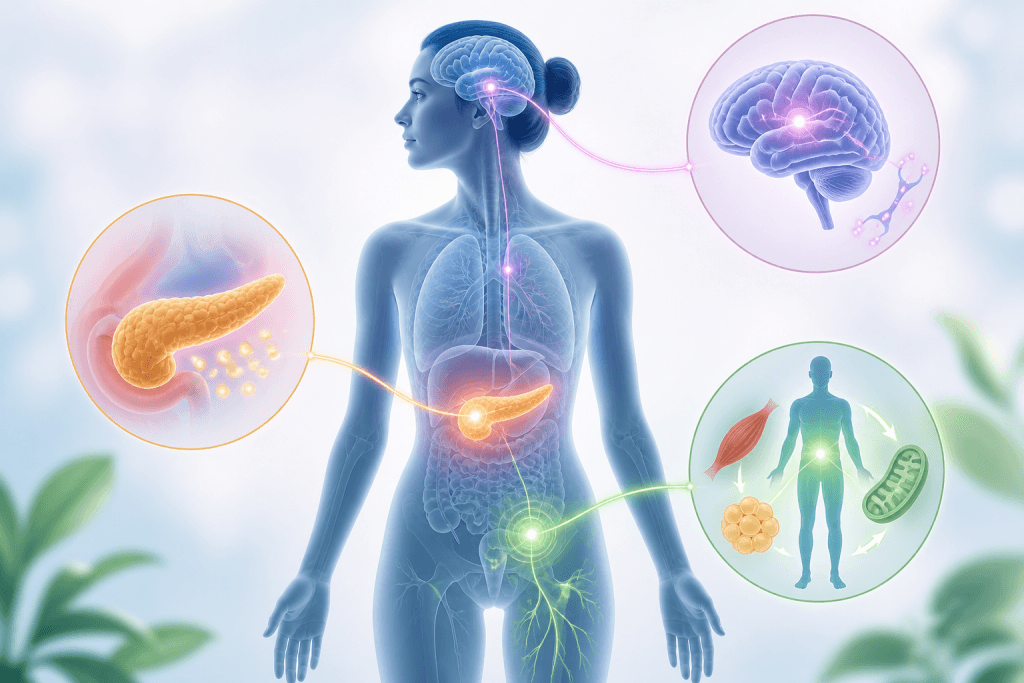
GLP-1 activation provides the foundation: appetite suppression, improved insulin secretion, and slowed digestion. This is the same mechanism that made semaglutide effective.
GIP activation adds a complementary layer. GIP receptors in the pancreas further enhance insulin secretion in response to meals. Additionally, GIP appears to modulate adipose tissue function—how your body stores and mobilizes fat. When GIP and GLP-1 work together, the result is a synergistic effect that produces:
- Greater weight loss compared to GLP-1 alone, with more substantial fat mass reduction
- Stronger glycemic control, with larger HbA1c reductions
- More pronounced improvements in metabolic syndrome markers
- Better tolerability for some users, with fewer gastrointestinal side effects than semaglutide-only therapy
Clinical data consistently demonstrated that tirzepatide outperformed semaglutide in head-to-head trials, with some patients achieving weight losses exceeding 20% of baseline body weight—a threshold previously seen primarily in bariatric surgery populations.
Retatrutide: The Triple-Agonist Revolution
Retatrutide represents the next evolution: a true triple agonist targeting GLP-1, GIP, and glucagon receptors simultaneously. This is where the physiology becomes particularly fascinating.
Understanding the Triple Mechanism
GLP-1 and GIP activation provide the foundation we’ve already discussed: appetite suppression, improved insulin secretion, and metabolic optimization.
Glucagon receptor activation is the game-changer. In the body, glucagon is traditionally thought of as a hormone that raises blood sugar—and it does. However, glucagon also has another critical function: it increases energy expenditure and promotes fat mobilization.
In a triple-agonist context, this is elegant. The glucagon component drives fat burning and increases your metabolic rate. Meanwhile, the GLP-1 and GIP components keep your appetite suppressed and ensure adequate insulin secretion. The net result: your body burns more calories while consuming fewer calories, all while maintaining healthy blood sugar levels.
This triple approach appears to create what researchers call “maximal metabolic remodeling”—a comprehensive shift in how your body processes energy, stores fat, and regulates appetite.
The Retatrutide Advantage
Early clinical data on retatrutide suggest:
- Exceptional fat loss, with some trials reporting weight reduction percentages approaching or exceeding bariatric surgery outcomes
- Marked reduction in visceral fat, the most metabolically harmful fat depot
- Powerful glycemic control, potentially enabling medication reduction in diabetic patients
- Improvements in liver health, with potential benefits for NAFLD/NASH given the pronounced fat mobilization
- Enhanced energy expenditure as a mechanism, not just reduced caloric intake
The key distinction: while tirzepatide optimizes how your body stores and uses energy, retatrutide adds an active fat-burning component through glucagon receptor activation.
The Practical Reality: Why People Are Transitioning

Several factors have driven the conversation around transitioning from tirzepatide to retatrutide:
Supply and regulatory dynamics. Tirzepatide sourcing has become increasingly challenging due to FDA crackdowns on compounding pharmacies. Many people have shifted to research-grade peptide suppliers, where retatrutide availability has grown as clinical trials progress.
Demonstrated efficacy. The anecdotal and clinical data on retatrutide’s fat-loss effects have been genuinely impressive, leading many to view it as the “next level” of therapy.
Cumulative metabolic benefits. For people who’ve already experienced tirzepatide’s benefits, retatrutide offers the potential for further improvements—especially if visceral fat reduction or additional weight loss remains a goal.
Tracking Your Transformation: The Importance of Data
Whether you’re on tirzepatide, considering retatrutide, or somewhere in between, the ability to track your progress systematically is invaluable. Understanding how your body is responding—not just weight, but body composition, energy levels, and health markers—helps inform whether you’re on the right therapy for your goals.
This is where comprehensive tracking becomes essential. The ShotLog app is designed specifically for this purpose, offering 14-point body measurement tracking, progress photography, and weight monitoring that gives you a complete picture of your transformation. Many users find that visualizing their progress through data helps maintain motivation and allows meaningful conversations with their healthcare providers about therapy effectiveness.
Additionally, the app’s Biograph feature visualizes how peptide levels fluctuate in your body over time, helping you understand the pharmacokinetics of whatever therapy you’re using. This kind of personalized data is increasingly important as you optimize your protocol.
Managing Your Supply and Consistency
Consistency is crucial for any peptide therapy. Missing doses or inconsistent administration can derail progress and make it difficult to assess true efficacy.
For those managing peptide supplies—whether vials, pens, or syringes—organization is key. Quality storage solutions like peptide vial cases help protect your investment and maintain peptide stability. If you travel frequently, the Ultimate Peptide Travel Cooler Case ensures your compounds stay at proper temperatures while on the go.
The ShotLog app complements physical organization with smart reminders and vial tracking, helping you maintain consistent adherence and never miss a dose due to simple oversight.
Safety Considerations and Side Effect Profiles
Both tirzepatide and retatrutide share a similar side effect profile, though individual tolerance varies considerably:
- Gastrointestinal effects (nausea, diarrhea, constipation) are most common, particularly during initial use or dose escalation
- Decreased appetite is the intended effect but can be intense for some users
- Acid reflux has been reported by some users
- Fatigue or energy fluctuations as your body adapts to new metabolic patterns
Importantly, tirzepatide is FDA-approved for type 2 diabetes and weight management, while retatrutide remains investigational and is accessed through research supply channels or clinical trials. This distinction matters for regulatory status and insurance coverage.
Some research suggests that retatrutide may offer slightly different tolerability than tirzepatide, though this likely varies individually. The triple-agonist mechanism may affect gastrointestinal tolerance differently than dual agonism, but current evidence is still emerging.
Who Benefits Most?
Tirzepatide is ideal for:
- People with type 2 diabetes seeking improved glycemic control and weight loss
- Those who didn’t achieve desired results with GLP-1 monotherapy
- Individuals with metabolic syndrome markers (high blood pressure, elevated lipids, excess visceral fat)
- Anyone seeking a middle ground between GLP-1-only therapy and more aggressive interventions
Retatrutide may be particularly valuable for:
- People who’ve plateaued on tirzepatide and want additional fat loss
- Those with significant visceral fat or NAFLD who need aggressive fat mobilization
- Individuals seeking maximal metabolic transformation and energy expenditure enhancement
- People prioritizing the most aggressive evidence-based fat loss available
The Future of Incretin-Based Therapy
The progression from semaglutide to tirzepatide to retatrutide demonstrates a clear trend: rational polypharmacology. By targeting multiple complementary pathways, we achieve synergistic effects that produce better outcomes than any single pathway alone.
This isn’t the end of innovation. Future compounds may add additional receptor targets or optimize potency and selectivity further. However, retatrutide currently represents the frontier—the most comprehensive incretin-based approach available.
What’s particularly exciting is that these advances are making profound metabolic change accessible to more people. Where bariatric surgery was once the only option for substantial weight loss, incretin-based therapies now offer evidence-based alternatives that work with your body’s natural systems.
Key Takeaways
- Tirzepatide (dual GIP/GLP-1 agonist) represented a major advance over GLP-1 monotherapy, delivering superior weight loss and metabolic benefits
- Retatrutide (triple GLP-1/GIP/glucagon agonist) adds energy expenditure and fat mobilization on top of tirzepatide’s mechanisms
- Both compounds work synergistically with your body’s natural incretin system rather than fighting against it
- Clinical evidence shows each step in this evolution delivers incrementally better metabolic outcomes
- Tracking progress systematically with tools like the ShotLog app helps optimize your therapy and maintain consistency
- Individual response varies significantly—the “best” therapy is the one that works best for your unique physiology and goals
Important Disclaimer
This article is for educational purposes and should not be considered medical advice. Retatrutide is currently investigational and not FDA-approved. Tirzepatide is FDA-approved for type 2 diabetes and chronic weight management. Any decision to use, transition between, or modify peptide therapies should be made in consultation with a qualified healthcare provider who understands your complete medical history, current medications, and individual health goals. Never attempt to self-adjust protocols without professional medical guidance.
Related Products from ShotLog
To support your peptide therapy journey, ShotLog offers a complete ecosystem of tools and tracking solutions:
- ShotLog App (iOS & Android) — The comprehensive peptide tracking platform with smart protocol automation, biograph visualization, 14-point body measurements, progress photos, weight tracking, and smart reminders to keep you consistent
- Reusable Peptide Pen ($20.99) — For efficient and repeatable peptide administration
- NEST Professional Research Pen Injector ($44.99) — Premium precision injector for researchers and serious enthusiasts
- Ultimate Peptide Travel Cooler Case ($29.99) — Maintain proper temperature control while traveling
- Universal Peptide Pen Needles ($9.49) — Compatible with most peptide pen systems
- Peptide Vial Cases ($