
The Hidden Science Behind Your Body’s Reaction to Peptides
If you’ve ever noticed redness, swelling, or itching after a peptide injection, you’re experiencing one of the most common—and misunderstood—aspects of peptide therapy. These injection site reactions aren’t a sign that something is wrong; they’re actually a fascinating display of your immune system doing exactly what it’s designed to do.
Understanding the science behind these reactions can transform your peptide journey from anxiety-inducing to empowering. Let’s explore why your body responds this way and how you can optimize your experience while maximizing the incredible benefits of peptides like GHK-Cu, ipamorelin, and CJC-1295.
What’s Really Happening When Your Skin Reacts
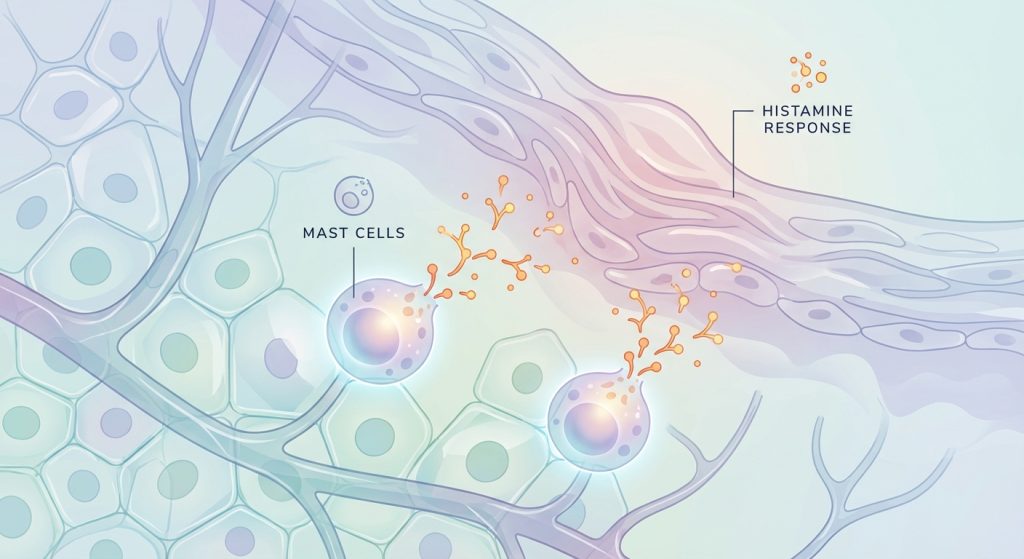
When you inject peptides subcutaneously, your body encounters these therapeutic compounds as foreign substances—even though they’re designed to help you. This triggers a sophisticated immune response that begins with specialized cells called mast cells, which are abundantly distributed just beneath your skin.
These mast cells act as your body’s first line of defense, releasing a chemical messenger called histamine into the surrounding tissue. This histamine cascade causes blood vessels to dilate and become more permeable, leading to the characteristic signs you might notice: redness from increased blood flow, swelling from fluid accumulation, and that familiar itching sensation.
This response is particularly common with growth hormone-releasing peptides like ipamorelin and CJC-1295, as well as tissue-repairing compounds like GHK-Cu. Research shows that up to 50-80% of peptide users experience some form of injection site reaction, making it one of the most universal aspects of peptide therapy.
The Difference Between Normal Reactions and True Allergies
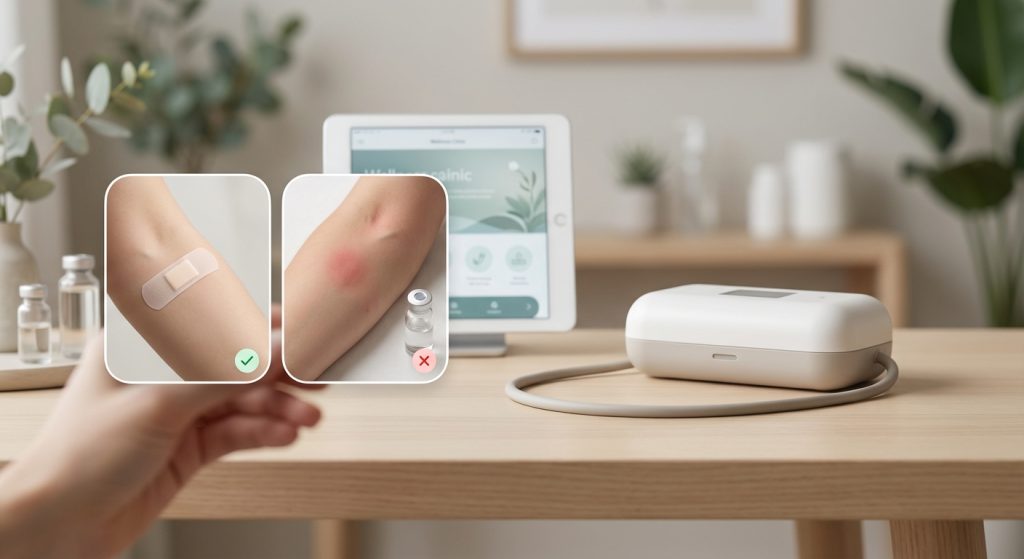
It’s crucial to distinguish between common histamine-mediated reactions and true allergic responses. Most injection site reactions are what scientists call “pseudoallergic”—they look and feel like allergic reactions but don’t involve the same immune pathways.
Normal histamine reactions typically include:
- Localized redness and warmth at the injection site
- Mild to moderate swelling that stays contained to the area
- Itching or tingling sensations
- Small, raised bumps (hives) that appear and disappear within hours
These reactions usually peak within 15-30 minutes and resolve completely within 24-48 hours. Many users find that tracking their reactions with tools like the ShotLog app helps them identify patterns and optimize their injection technique over time.
True allergic reactions are rare but serious, involving:
- Widespread hives extending far from the injection site
- Facial swelling, especially around the eyes and mouth
- Difficulty breathing or swallowing
- Rapid pulse or dizziness
Why Some People Experience More Intense Reactions

Individual variation in injection site reactions comes down to several fascinating factors. Your genetic makeup influences how many mast cells you have and how easily they’re triggered. People with conditions like histamine intolerance, atopic dermatitis, or other inflammatory conditions often experience more pronounced reactions.
The peptide structure itself also plays a role. Clinical evidence suggests that growth hormone secretagogues like ipamorelin and CJC-1295 may trigger stronger histamine responses in certain individuals compared to other peptides. This isn’t necessarily problematic—it’s simply your body’s unique biochemical signature responding to these powerful therapeutic compounds.
Injection technique and site rotation matter too. Users who maintain detailed tracking through platforms like ShotLog often notice that consistent site rotation and proper technique significantly reduce reaction severity over time. The app’s biograph feature can even help you visualize how your body’s response patterns change as you develop tolerance.
The Hidden Benefits of Understanding Your Body’s Response
While injection site reactions might seem like an inconvenience, understanding them actually provides several advantages for your peptide journey:
Enhanced Safety Awareness: Knowing what normal reactions look like helps you quickly identify when something might be outside the typical range, ensuring you can seek appropriate medical guidance when needed.
Improved Confidence: Understanding the science behind these reactions eliminates the anxiety and uncertainty that many new peptide users experience. When you know your body is responding normally, you can focus on the incredible benefits you’re working toward.
Better Long-term Outcomes: Users who understand and properly manage injection site reactions are more likely to maintain consistent peptide protocols, leading to better results from compounds like GHK-Cu for skin rejuvenation or ipamorelin and CJC-1295 for growth hormone optimization.
Evidence-Based Strategies for Minimizing Discomfort
Research and clinical experience have identified several effective approaches to reducing injection site reactions:
Temperature Management: Allowing peptides to reach room temperature before injection can significantly reduce tissue shock and subsequent histamine release. For those who travel frequently, investing in proper storage solutions like the Ultimate Peptide Travel Cooler Case ensures your peptides maintain optimal temperature while remaining accessible for room temperature equilibration.
Site Rotation and Technique: Systematic rotation of injection sites prevents tissue sensitization and allows previous sites to fully recover. Many users find that organizing their supplies with dedicated vial cases helps maintain a clean, efficient rotation system.
Pre-treatment Approaches: Some individuals benefit from taking natural antihistamines or applying cold therapy before injection, though these strategies should always be discussed with your healthcare provider first.
The Role of Quality and Consistency
One often-overlooked factor in injection site reactions is the quality and consistency of your injection process. Using proper, sterile needles designed for subcutaneous injection can significantly impact your comfort level. Universal peptide pen needles, for example, are specifically engineered to minimize tissue trauma while ensuring accurate delivery.
Consistency in your injection routine also plays a crucial role. The ShotLog app’s smart reminder system helps users maintain regular schedules, which can actually help your body develop tolerance to the injection process over time, potentially reducing reaction severity.
When Professional Guidance is Essential
While most injection site reactions are benign and self-resolving, certain situations warrant immediate medical attention. If you experience reactions that spread beyond the injection site, persist for more than 72 hours, or are accompanied by systemic symptoms, contact your healthcare provider immediately.
Additionally, if reactions seem to be worsening over time rather than improving, or if they’re preventing you from maintaining your prescribed protocol, professional guidance can help identify underlying factors and adjust your approach accordingly.
Maximizing Benefits While Minimizing Discomfort
The key to successful peptide therapy lies in understanding that injection site reactions are often a temporary bridge to incredible long-term benefits. Whether you’re using GHK-Cu for its proven collagen synthesis and wound healing properties, or leveraging ipamorelin and CJC-1295 for their growth hormone-releasing effects that support muscle growth, fat loss, and recovery, temporary local reactions shouldn’t derail your journey toward optimal health.
By tracking your progress comprehensively—including both benefits and any side effects—you can work with your healthcare provider to optimize your protocol. The ShotLog app’s 14-point body measurement tracking and progress photo features help you maintain perspective by documenting the positive changes you’re achieving, even when dealing with temporary injection site discomfort.
Disclaimer: This information is for educational purposes only and should not replace professional medical advice. Always consult with a qualified healthcare provider before starting any peptide therapy, and discuss any concerns about injection site reactions or other symptoms you may experience. Individual responses to peptides can vary significantly, and what’s normal for one person may not be appropriate for another.
Related Products from ShotLog
- Universal Peptide Pen Needles ($9.49) – Designed for comfortable, precise subcutaneous injection with minimal tissue trauma
- Ultimate Peptide Travel Cooler Case ($29.99) – Maintains optimal peptide temperature while traveling, ensuring quality and reducing reaction risk
- Peptide Vial Cases ($4.98-$9.98) – Keep your supplies organized and sterile for consistent injection site rotation
- ShotLog App – Track injection sites, monitor reactions, and maintain optimal peptide protocols with smart reminders and progress tracking